I heard the following joke from a friend and professor of comparative literature, Nauman Naqvi, who heard it from a friend, Gil Anidjar, who was a student of Derrida's. It goes as follows:
On Yom Kippur Eve the Rabbi of the congregation went up before the ark, bowed low, and said in a whisper, "I am nothing before you, O God." Whereupon he wept and returned to his place on the bimah. Then, the chazan went up to take his turn before the presence of the Holy One. He too, bowed low and uttered the words, "I am nothing before you, O God." And he too, wept and returned to his place on the Bimah. Then, the lowliest member of the congregation, who made his living as synagogue janitor, went up to ark to bow low. But as he did, saying, "I am nothing before you, O God," the Rabbi turned the chazan and gave him a little nudge, saying, "Look who feels like nothing tonight."
Tuesday, November 25, 2008

Monday, November 24, 2008
The Still Small Voice
The still small voice, the chilling echo that can only be heard in the subsiding (tzimtzum) of voice, is the locus in which we come to realize that the nothing is not nothing. The still small voice is the voice of conscience in us, as well as in the divine. And it is also the voice of history, which can be heard whining beneath the piles of destruction. The still small voice is the sound of the nothing nothinging. It is the disturbing sound of the silence which hopes to be left undisturbed. Traditionally, people have attributed the power to tear down walls and to awaken souls to the blast of the shofar. But really, the alarm clock of the universe, the idol-smashing instrument of the divine is not the ram’s horn, an arbitrary and only figurative ritual object, but the still small voice that hovers in the suspension of the tekiah gedolah. The still small voice is the only voice of God. Everything that was uttered at Sinai was only preliminary, symbolic, like the ram’s horn. The real reason God spoke at Sinai was so that people could hear the reverberation of His voice when he ceased speaking.
Sunday, November 16, 2008
Couplets of Our Time
If one who seeks nothing will find nothing,
One who finds nothing will yet seek something.
--Indian Proverb
Hear O God, your servant, your self, is one!
(Praised be his name for all its finitude).
--Israelite Call to Worship
Where the cicadas sing in midday heat,
We discuss their reverberating song.
--Inscription on Plato’s tomb
The Great Wall divides paradise from us,
Though the angels wander to glimpse our side.
--Oracle Bone IX.22
The Nile’s defiant flow maintains us,
Our defiant flow, now dead, retains it.
--Book of The Dead (apocryphal)
Bacchus, impostor God, thus posturing,
You reveal the truth of their costuming.
--Motto of the Cult of Dionysus
I made a pilgrimage to poetry,
But hindered on my way, wrote this today.
--Chaucer’s Tale
Do I dare to lift my eyes from the well?
Hold my hands then while I look heavenward.
--The prayer of Baudelaire’s twin
Fragmented Reflections Upon a Trip to Reality
The self perceiving God is God, the self
Perceiving self perceiving God is self.
The self kissing trees is trees, the self
Kissing self kissing trees is self.
But the self beholding another self is
Not the other self, nor is it itself.
It is the between which holds the heavens
And the earth both together and apart.
Its being forever constantly displaced,
Such not-yet-self and yet-still-self becomes.
The other is God, but God is not the other.
So we await the happening of God.
Awaiting as the signs, the messengers,
Come filing in, announcing a soonness.
God is always coming soon, always soon.
But in the meantime, I have you. I am.
Disparate is my “amness” from your “isness,”
Our “areness” from “to be” and “will have been.”
And yet, how we go on trying to be,
Not as stalwart beings, but becomings.
We bridge, though bridges often fail when tried,
The cliffs, from which, after trials, gods plunge.
Gods, who are synonyms for not-the-God,
Are Thou’s accidents, if not Thou’s essence.
And as accidents, they are essential
For gathering the days of the Divine,
For gathering the daze of the Divine
Into a single daze, to gaze upon.
Thus, blessed (I think), is the self which selves,
And the self which Gods, and the self which Thous.
May, Self/God/Thou grant Me/You/Other life,
And the Nile-like overflowing of life.
In short, may fallenness become uplift,
And downcast eyes see what the angels can’t.
Monday, November 10, 2008
The Sigh
Isn’t it telling that life was created with a sigh? God heaved an anxious breath, a heavy sigh, and lo and behold, earth’s nostrils were infused with the spirit of life. But what is a sigh, and what is its source? Why, after all, did God sigh in the first place? To answer this question we must first note that not all speech-acts require speech. Sometimes an inflected breath, a fleshy silence, is just as potent as any “Let there be light” or “I do.” Sighing is not simply a descriptive event; it is a colossally creative activity. Sighing finds its expression in a sudden awakening to the presence of a void. But to sigh is not simply to acknowledge that void, to bow in deference to it, and humble oneself before the incompleteness that it poses. To sigh is, in the very moment that one pays tribute to the nothing, to fill it with a cathartic gust of energy and an explosive power of desire, and thus deprive it of its very nothingness. In the beginning, when the world was not-yet a world, but a mere disunity, a nether-clump of dark and deep, a heap of indistinguishables, a pre-stage of unordered non-beings, there was much for the Divine, who was himself not-yet anything but the nothing, to sigh over. And so, it is perhaps not so extraordinary that the First Principle, the Nothing on which all turtles ad infinitum stand, sighed, and in so sighing, became the Creator of the Universe.
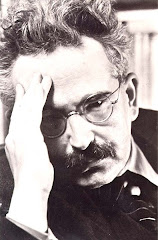
This sigh is a never-ending one. It can still be felt blowing the universe beyond its outskirts, casting off nowness and thisness into diaspora, and generating new horizons of possibilities. This infinite sigh, the sigh of the nothing which is the life-force of the cosmos, however, is not only a creative and productive sigh. It is also a deracinating and catastrophic ge(i)sture. It is the very sigh, which Walter Benjamin identified in his ninth thesis on the philosophy of history as the storm blowing from paradise. It is the very sigh in which the Angel of History’s wings are caught and by which he is prevented from awakening the dead. This sigh, Benjamin tells us, we call progress. And perhaps we are right to call it so. But this sigh is, even if progressive, quite violent. This sigh tore life out of Adam’s rib and blasted humanity out of Eden. And what was the weapon Cain used to kill his brother Abel, if not the sigh, the bitter and enigmatic sigh which constitutes the textual oblivion in the verse “And Cain said to his brother Abel…and when they were in the field, Cain set upon his brother Abel and killed him?”[1] It was God’s sigh of regret at having created the world, which stirred the clouds to pour down rain for forty days and nights.
For, you see, the sigh, which always originates in the face-to-face encounter with the nothing, must continue to heave, since the moment that it brings the not-yet to the here, a new not-yet arises, and the nothing reasserts its omnipotence. The world is caught in the exasperating destruction of the sigh which is ever fighting to renew what is always dying. The sigh, and its counterpart, which is really not its antithesis, but its mother, the nothing, cannot be separated into neat opposing categories such as “good” and “evil” or “true” and “false.” For the sigh, and the nothing which it fills, are of one seem. If the nothing ceased to nothing, the sigh would cease to sigh. And if the sigh ceased to sigh, the nothing would become but nothing and cease to be the nothing. Thus the war that rips our souls apart in cosmic battle is not a contest between God and the Devil, as Dostoevsky would say, but rather the unsettling embrace of exhalation and inhalation, an embrace which is in one fell swoop a kiss of death and a kiss of life.
It is for this reason that the sages teach that we possess neither a good nor an evil urge, but only the empty urge itself. For no urge is unqualifiedly good or evil. And perhaps no urge is purely good or evil. The urge is, after all, the sigh. But the sigh is always an ambivalent matter, which is why the last sigh will be a sigh of relief. When the Messiah comes, his sigh will be a sigh to end all sighs.
Tuesday, October 28, 2008
The Mystery of Words
In Plato's Theaetetus, a dialogue that attempts to answer the question, "What is knowledge?" truth is compared to a word. A word, after all, on a mere material basis, consists of letters, which together form syllables. The word "Socrates" is nothing but the conjoining of So-Cra-Tes. Yet, Socrates is not the same as Crasotes or Tesocra. And it is not the same, not simply because the arrangement of its parts are different, but because such a rearrangement tampers with its very essence, turning its significance into nonsense. Mathematics posits that A+B=B+A. But, words show that this transitive property of addition work only on a material level. On a more "spiritual" plane, if one may use the word "spiritual" without conjuring up the spirits, it is precisely the uniqueness of the arrangement that lends identity to the whole. The Talmud teaches that each person comes from Adam, and that as a result, we are at once unique, alone, in the image of the divine, etc., and, at the same time, are earthly, commonplace, and in the image of man. None of us can claim nobler birth than anyone else, since we all share the common ancestors of Adam and Eve. This tension, the Talmud argues should be embodied by two slips of paper, one of which we should keep in one of our pockets, the other in the other. One slip says, "For me alone was the world created." The other reads, "I am but dust of the earth."
Words, too, reflect this tension. But in our modern/post-modern world, our danger is not in realizing that we are dust of the earth, but in forgetting that our dust is filled with the breath of life. Words are just bags of sounds, and musical notes are just vibration frequencies. And yet the words we speak carry meaning, and the notes we bellow movement. Why? It seems that from the chaos and the void spread over the face of the dark and the deep, existance raises its mighty paw against existence (Here, I am indebted to Rav J. Derrida's essay on "Differance"). This resistance, which cannot perhaps be heard, emerges as the still small voice, the last echo of the shofar blast, which The Holy One blew on the primordial Dawning of the first of days. We can hear it only in the discrepancy between the syllables that compose the word and the word itself.
Words, too, reflect this tension. But in our modern/post-modern world, our danger is not in realizing that we are dust of the earth, but in forgetting that our dust is filled with the breath of life. Words are just bags of sounds, and musical notes are just vibration frequencies. And yet the words we speak carry meaning, and the notes we bellow movement. Why? It seems that from the chaos and the void spread over the face of the dark and the deep, existance raises its mighty paw against existence (Here, I am indebted to Rav J. Derrida's essay on "Differance"). This resistance, which cannot perhaps be heard, emerges as the still small voice, the last echo of the shofar blast, which The Holy One blew on the primordial Dawning of the first of days. We can hear it only in the discrepancy between the syllables that compose the word and the word itself.
Monday, October 20, 2008
Poetry and History
“The distinction between historian and poet is not in the one writing prose and the other verse—you might put the work of Herodotus into verse, and it would still be a species of history. It consists really in this, that the one describes the thing that has been, and the other a kind of thing that might be. Hence poetry is something more philosophic and of graver import than history, since its statements are of the nature of universals, whereas those of history are of singulars.”
--From Aristotle’s Poetics
Though Thucydides famously stated at the beginning of his History of the Peloponnesian War, “My work is not a piece of writing designed to meet the taste of an immediate public, but was done to last for ever,” (I.22) it is clear that in order for Thucydides’ work to have lasted and to have remained a possession for all time, it also had to please its audience. That Thucydides, despite his lambasting of romantic embellishments (I.21), could have produced something as dramatic and ahistorical as the Melian dialogue attests to what must have been his profound recognition that history is far more than simply a true account of the past. Indeed, if we are to understand what truth was for the Greeks, a Heideggerian scrutiny of their word for it, Aleitheia, will reveal it to mean un-concealment or un-forgetting. That the word is etymologically given only in negative terms, with an alpha-privative, demonstrates the Greek’s underlying view of the kinship between truth and memory. This view pervades the dialogues of Plato, especially Phaedo, Republic, and Phaedrus, where Socrates argues for the soul’s immortality on the very grounds that all knowledge is recollection (Anamnesis). But if history’s object is truth and truth’s source is memory, it becomes apparent why even someone as driven towards scientific objectivity as Thucydides could not have resisted dramatic interpolation and invention.
Yet the lack of reliable source-keeping in ancient times forced historians like Herodotus and Thucydides to write histories only of their recent times, histories of wars through which they had lived and in which they had fought. But this writing about a near-past coupled with the fact that the subject of that past was war, ensured that history would blur with epic.
But in any event, could Thucydides have claimed his book to have been a possession for all time if it hadn’t been of epic and tragic proportion? Assuredly not. For, so the argument seems to run in ancient historiography from Herodotus to Polybius, not everything that happened in the past is worthy of being called history. Only those events from which we can draw universal lessons are ultimately important. Herodotus does not write history to preserve the miniscule deeds of insignificant men from the blackening of time, but to preserve those belonging to great men, political leaders, emperors, generals, etc.
But in this way history and poetry converge. For Aristotle argues in Poetics that a tragedy must take as its subject a person of high birth and exalted stature. And Homer, in the Iliad and Odyssey, when not slandering the gods, sings almost exclusively about "the best of men." Both the ancient poets and the ancient historians sought to impart lessons to their audience, and both realized that the most effective way to do this was through dramatic art.
Although Aristotle distinguished between history and poetry, this distinction did not hold up for Herodotus and Thucydides. History was, of course, the study of what had happened, yet it was this very fact that also made it a study of what might be. The kind of plague which Thucydides describes could have just as easily been the subject matter for a Sophoclean play (while the plague of Thebes in Sophocles’ Oedipus Tyrannous could well have been a historical reality), yet the important thing is that it actually occurred, and that moreover, it actually occurred in the live memories of the Athenian people.
Even when Polybius strongly writes that history without the truth is but an idle tale (a sentence that resonates with Shakespeare’s admission that “Life is a tale told by an idiot signifying nothing”), it is important to remember that truth was a much more malleable concept for the Greeks, and one deeply tied to memory. Even Polybius, who himself attempted to write a universal history of epic proportions, consigned himself to focus on the Roman Empire, an empire that had altered his personal life by taking him away from his Greek homeland. And even Polybius could not help but invoke throughout his work the epic force, who later came to be a Roman deity, Fortune (Tyche).
History, as conceived by Herodotus, Thucydides, and Polybius, was at once the study of singulars (both Herodotus and Thucydides argue for the unprecedented nature of the wars on which they write, while Polybius emphasizes the unprecedented character of the Roman people, the unprecedented accomplishments of their constitution, and the unprecedented reach of their sphere of influence), yet it is also the study of universals (Herodotus tells stories of the great deeds of all men and shows hubris to be a condition that affects all leaders, Thucydides sees history as a possession for all time, and Polybius understands all world events to effect each other in an intricate nexus). This deep knowledge of history’s essence underscores why for all three, history could be at once theatrical, epic, tragic, and objective, disciplined, true.
--From Aristotle’s Poetics
Though Thucydides famously stated at the beginning of his History of the Peloponnesian War, “My work is not a piece of writing designed to meet the taste of an immediate public, but was done to last for ever,” (I.22) it is clear that in order for Thucydides’ work to have lasted and to have remained a possession for all time, it also had to please its audience. That Thucydides, despite his lambasting of romantic embellishments (I.21), could have produced something as dramatic and ahistorical as the Melian dialogue attests to what must have been his profound recognition that history is far more than simply a true account of the past. Indeed, if we are to understand what truth was for the Greeks, a Heideggerian scrutiny of their word for it, Aleitheia, will reveal it to mean un-concealment or un-forgetting. That the word is etymologically given only in negative terms, with an alpha-privative, demonstrates the Greek’s underlying view of the kinship between truth and memory. This view pervades the dialogues of Plato, especially Phaedo, Republic, and Phaedrus, where Socrates argues for the soul’s immortality on the very grounds that all knowledge is recollection (Anamnesis). But if history’s object is truth and truth’s source is memory, it becomes apparent why even someone as driven towards scientific objectivity as Thucydides could not have resisted dramatic interpolation and invention.
Yet the lack of reliable source-keeping in ancient times forced historians like Herodotus and Thucydides to write histories only of their recent times, histories of wars through which they had lived and in which they had fought. But this writing about a near-past coupled with the fact that the subject of that past was war, ensured that history would blur with epic.
But in any event, could Thucydides have claimed his book to have been a possession for all time if it hadn’t been of epic and tragic proportion? Assuredly not. For, so the argument seems to run in ancient historiography from Herodotus to Polybius, not everything that happened in the past is worthy of being called history. Only those events from which we can draw universal lessons are ultimately important. Herodotus does not write history to preserve the miniscule deeds of insignificant men from the blackening of time, but to preserve those belonging to great men, political leaders, emperors, generals, etc.
But in this way history and poetry converge. For Aristotle argues in Poetics that a tragedy must take as its subject a person of high birth and exalted stature. And Homer, in the Iliad and Odyssey, when not slandering the gods, sings almost exclusively about "the best of men." Both the ancient poets and the ancient historians sought to impart lessons to their audience, and both realized that the most effective way to do this was through dramatic art.
Although Aristotle distinguished between history and poetry, this distinction did not hold up for Herodotus and Thucydides. History was, of course, the study of what had happened, yet it was this very fact that also made it a study of what might be. The kind of plague which Thucydides describes could have just as easily been the subject matter for a Sophoclean play (while the plague of Thebes in Sophocles’ Oedipus Tyrannous could well have been a historical reality), yet the important thing is that it actually occurred, and that moreover, it actually occurred in the live memories of the Athenian people.
Even when Polybius strongly writes that history without the truth is but an idle tale (a sentence that resonates with Shakespeare’s admission that “Life is a tale told by an idiot signifying nothing”), it is important to remember that truth was a much more malleable concept for the Greeks, and one deeply tied to memory. Even Polybius, who himself attempted to write a universal history of epic proportions, consigned himself to focus on the Roman Empire, an empire that had altered his personal life by taking him away from his Greek homeland. And even Polybius could not help but invoke throughout his work the epic force, who later came to be a Roman deity, Fortune (Tyche).
History, as conceived by Herodotus, Thucydides, and Polybius, was at once the study of singulars (both Herodotus and Thucydides argue for the unprecedented nature of the wars on which they write, while Polybius emphasizes the unprecedented character of the Roman people, the unprecedented accomplishments of their constitution, and the unprecedented reach of their sphere of influence), yet it is also the study of universals (Herodotus tells stories of the great deeds of all men and shows hubris to be a condition that affects all leaders, Thucydides sees history as a possession for all time, and Polybius understands all world events to effect each other in an intricate nexus). This deep knowledge of history’s essence underscores why for all three, history could be at once theatrical, epic, tragic, and objective, disciplined, true.
Subscribe to:
Posts (Atom)


 Posts
Posts